
Walking with Cedar in Yakushima's Forests
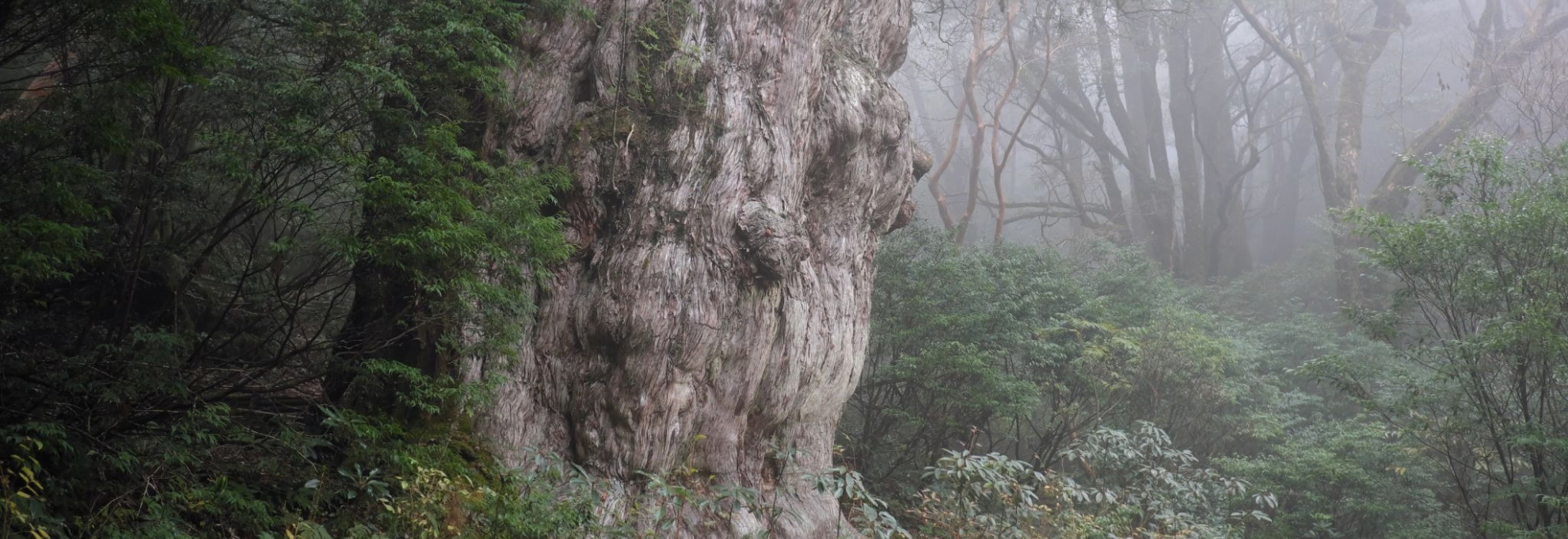
On the mist-covered island of Yakushima, a tree older than most civilizations still seems to breathe. Known as Jomon Sugi, this giant cedar is thought to be 2,000 to 7,200 years old. Its trunk rises like a pillar of history, and its bark holds years of wind, rain, and stillness.
- Author:
- Mirko Cisale
- Date:
- October 6 2026
Standing before it, you feel a shift. Life, like trees, grows best not in haste, but in seasons of patience.
At We Move to Heal, we know another Cedar—not rooted in soil, but grounded in wisdom. Our nature guide, Cedar, carries the same calm presence as Yakushima's ancient tree: steady, grounded, and deeply tied to the natural world. With that guide, hiking becomes more than movement. It becomes a conversation with the land.
Yakushima is a UNESCO site shaped by Japanese heritage, known for sacred trees and deep forest paths. For nature tourism, Yakushima offers more than a single famous tree. When Cedar leads, every step feels intentional. Trails are not only ways to get from one place to another. They are places to slow down, listen, and notice. Sunlight through leaves, the smell of moss after rain, and the cool rush of air near a waterfall become part of the journey. Breath softens. Shoulders drop. The mind stops planning and starts to take in the present.
The Pilgrimage to Jomon Sugi
Reaching Jomon Sugi is a full-day trek, and the Jomon Sugi hike often begins on the Arakawa Trail. The path crosses old logging railway tracks, wooden bridges, and forests so dense that the air seems alive. Along the way, other ancient cedars stand like sentinels. Each one has its own shape, scars, and story. Roots twist through dark soil like slow rivers, and fallen trunks become homes for ferns and saplings.
Hiking here is more than exercise. It is immersion. Footsteps mix with birdsong and the rush of water. Mist gathers and lifts. The world brightens and dims as clouds pass overhead. The forest teaches presence. It draws your attention away from deadlines and distractions, bringing it back to the moment.
There is also humility in the scale of the place. The trail asks for steadiness rather than speed, and for attention rather than force. A single exposed stone can change your footing. A slick boardwalk can ask for patience. In that careful movement, the nervous system has room to settle, and awareness returns to the body.
When you finally stand before Jomon Sugi, you may find yourself silent. It is not awe alone. Some moments are simply beyond words. The cedar does not perform. It endures. Its quiet invites your own.
Preparing for the Day
Yakushima's weather changes fast, and rain is part of the island's identity. A day can move from sun to heavy rain to fog and back again. Layers, rain gear, and dry socks can turn discomfort into something manageable. Good traction matters on wet roots and stone. A steady pace matters more than bursts of speed.
Water and food are not just fuel here. They are steadiness. Regular pauses, even short ones, help keep the body regulated and the mind clear. When guided by Cedar, breaks can also become moments of direction. A pause by a stream is not only rest. It is a chance to listen to the water, match breath to the forest, and re-enter the trail with softness.
Other Trails to Explore
While Jomon Sugi is the island's most famous tree, Yakushima's hiking trails offer something for every walker:
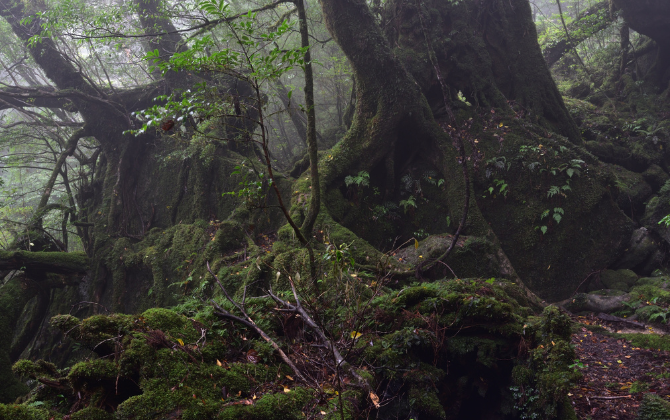
Shiratani Unsuikyo Ravine: A mossy world that inspired Studio Ghibli's Princess Mononoke, perfect for shorter, meditative walks. Here, green seems endless. Moss drapes stones and tree bases like velvet, and the forest floor glows after rain. The paths are gentle, with options to go deeper for those who want more time in the stillness.
Yakusugi Land: An easy-to-reach network of trails among centuries-old cedars. This area has loop options from short strolls to longer walks, making it a good place to ease into the island's terrain. Its ease invites lingering, and lingering lets details emerge: bark textures, the scent of cedar, the way light slips between branches.
Mt. Miyanoura: For those seeking a challenge, this is Kyushu's highest peak and a memorable Mt. Miyanoura hike. It offers wide views above the clouds. The climb moves through changing habitats, from forest to open, wind-swept ridges. On clear days, the horizon can feel very wide. Even when clouds wrap the mountain, the walk can feel deeply clear, a lesson in endurance and steady attention.
Practicing Forest Respect
Yakushima's forests are alive with fragile systems that take a long time to recover. Staying on the trail protects moss beds and young plants. Carrying out what you bring in keeps water and soil clean. Even small choices matter. They are part of the bond you build with the land.
Respect also means quiet. When voices lower, the forest comes forward. You notice the drip of water from leaves, the distant call of birds, and the soft sound of footsteps on packed earth. For many people, this kind of quiet feels new at first. With time, it becomes a kind of medicine.
Walking as Healing
Whether you stand beneath the vast canopy of Jomon Sugi or walk a quiet path closer to home, the lesson is the same: healing happens when we root ourselves in presence. You cannot rush a tree to grow. You cannot rush your own unfolding.
Movement becomes healing when it is paired with awareness. A hike can be a practice of noticing sensation without judgment. The warmth in your legs, the cool air in your lungs, the pulse that rises on a hill and settles on flat ground. These are signs of life coming back to the front.
Guided walks with Cedar make room for that return. The invitation is simple: keep your attention close, let the forest set the pace, and let your body relearn safety through rhythm and steady steps. In a world that often rewards urgency, the trees offer another model. They grow by amassing small moments, each ring a record of weather, time, and change.
When you walk with Cedar, the guide or the tree, you are reminded that the journey itself is the destination.
Jōmon Sugi
Alltrails
Are you ready to take the journey?
Take the journey and find your nature guide.