

JOY | A State You Create, Not Something You Wait For
Joy has never been something that arrived in my life by accident.
Not once.
- Author:
- William Burnett
- Date:
- December 8 2025
The moments where I’ve felt the most profound joy — holding my children, running long distances until the mind goes quiet, watching someone heal in real time, sitting in stillness after breathwork.
Every one of those moments came from a body I had worked to regulate and a mind I had practiced returning to the present.
Joy hasn’t been random for me.
I earned joy through intention.
And the longer I’ve walked this path, the more I’ve come to realise something that Bruce Lipton says brilliantly:
“Your perception creates your biology.”
That one sentence changed everything for me.
Because what is joy, if not a biological state shaped by perception, safety, presence, and meaning?
Joy Isn’t an Emotion. It’s a Physiological State.
I see this in my kids every day.
When my children feel safe, connected, understood, and seen, joy pours out of them effortlessly.
But the moment the nervous system tightens, joy disappears.
Adults aren’t any different.
We’ve just become better at disguising it.
When my nervous system is regulated — when I’m breathing well, sleeping well, moving my body, staying connected — joy rises without force.
When it’s not, I could be in a beautiful place with beautiful people, and still feel numb.
Peter Crone calls this out perfectly: “Freedom comes from understanding the nature of your mind, not from changing the world around you.”
Joy doesn’t come from rearranging life.
It comes from changing the internal state from which you experience life.
Movement Creates the Chemistry for Joy
Some of the purest joys of my life haven’t come on the best days,
but on the most challenging runs.
When you’ve been 60 kilometres deep into an ultramarathon — mind quiet, body fully online, breath smooth — joy appears in ways that feel ancient.
It’s not the “happiness” the world talks about.
It’s something deeper:
A sense of aliveness.
Movement primes the nervous system for joy by:
- Increasing BDNF (your brain’s “growth and resilience” molecule)
- Releasing stuck stress chemistry
- Regulating emotional charge
- Returning you to presence
- Reminding you that you are designed to move
It’s why a walk with your child, a cold ocean swim, a yoga class, or a morning 5K can change the entire trajectory of the day.
It’s biology responding to movement.
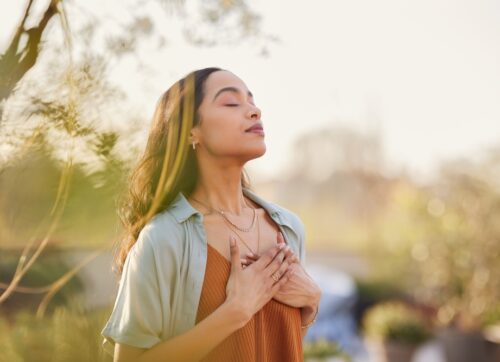
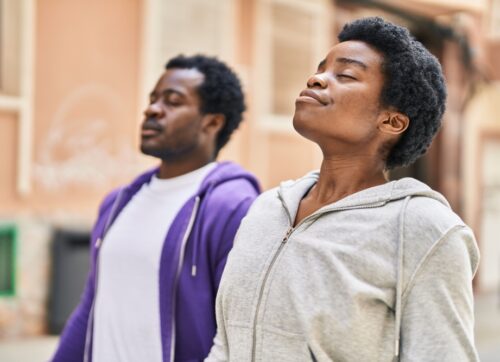
Breath Allows Joy to Land
Even as a mental health practitioner and someone who’s guided thousands through breathwork, I still forget sometimes:
Joy needs space to land.
And space is created through breath. Slow breathing + long exhales = ventral vagal activation.
This is the branch of the nervous system associated with safety, connection, playfulness, and joy.
When you breathe well, joy becomes possible.
When you hold your breath — emotionally or physically — joy becomes distant.
A Simple Practice I Use to Return to Joy (and teach my
kids)
- Move for 60 seconds.
Shake your arms, bounce your legs, and open your chest.
You’re waking the system.
- Breathe for 90 seconds.
In for 4, out for 6.
Every long exhale tells your body: “You’re safe.”
- Savour for 30 seconds.
Feel something small: warmth in the chest, gratitude for a child, breath in the belly.
Hold it.
Let it expand.
This technique trains the nervous system to recognise joy as safe, familiar, and repeatable.
Joy and Community
Working inside WMTH has shown me something I already understood intuitively:
Joy amplifies in community.
When people regulate together, breathe together, move together, and share stories together, joy spreads through the system like electricity.
It’s why our school programs work.
It’s why our partners thrive.
It’s why our general population connects so deeply with our content.
Human nervous systems heal faster together.
My Invitation for This Month
Joy isn’t something you wait for.
It’s something you cultivate.
One breath.
One walk.
One moment of stillness.
One emotionally safe connection.
Joy is not the peak at the end of the mountain.
Joy is the way up the mountain.
And this month inside We Move To Heal — in your home, your family, your practice, your classroom, your body — I invite you to do one thing:
Return to joy as a practice, not a pursuit.
Bring your body with you.
Your biology will handle the rest.
Are you ready to take the journey?
Take the journey and find your nature guide.